Explore common signage types, from channel letters and dimensional signs to neon, light boxes, and freestanding pylons. Compare lighting, materials, visibility, and placement.
The right sign depends on where it will be installed, how far away it needs to be seen, whether it must work after dark, and the character of your brand. A sign type describes its form or installation; materials and lighting are separate choices that can be combined.
Channel Letter Signs
Channel letters are individually fabricated three-dimensional letters or logos mounted to a wall or sign backing. They are widely used on storefronts because each character can be sized and spaced to suit the facade.
Front-Lit Channel Letters
Light shines through a translucent face, commonly acrylic, making the letter face visible at night. This option suits storefronts that need clear, direct illumination.
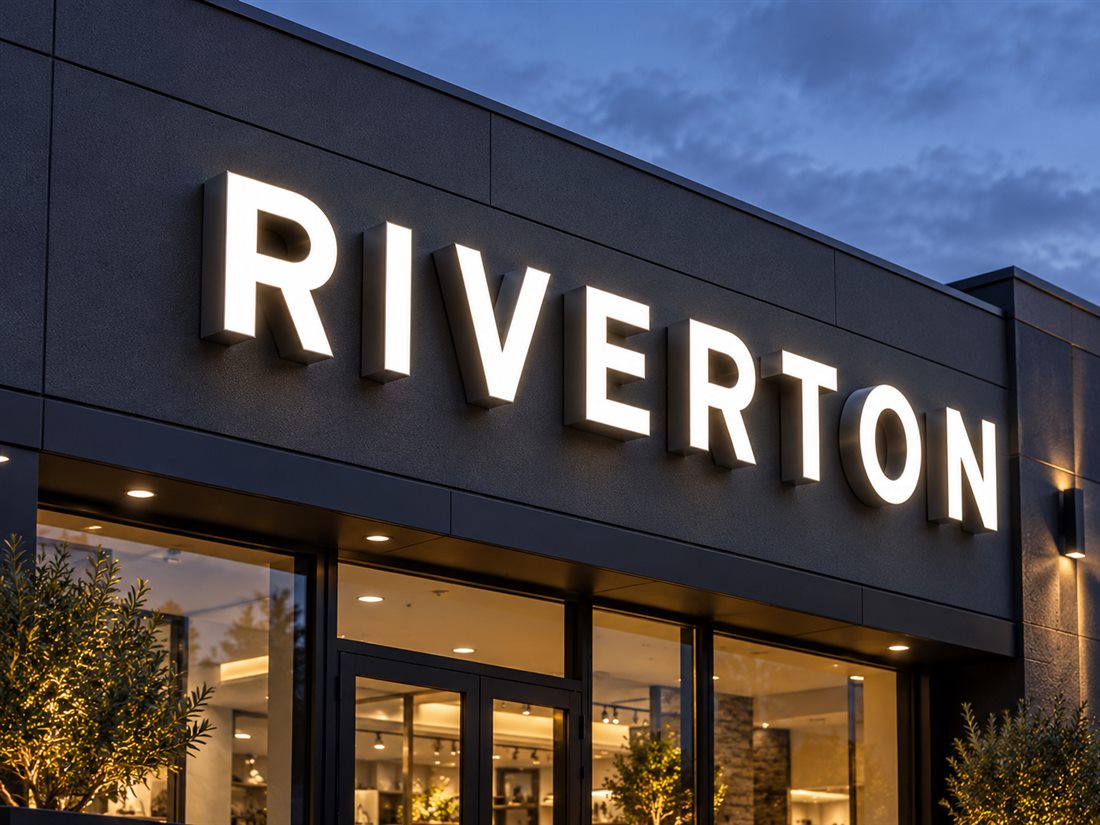 Front-lit channel letters use a bright face for direct visibility.
Halo-Lit Channel Letters
Also called reverse-lit or back-lit letters, these send light toward the mounting surface to create a halo around each letter. The effect is more atmospheric and depends on suitable spacing between the letters and the wall.
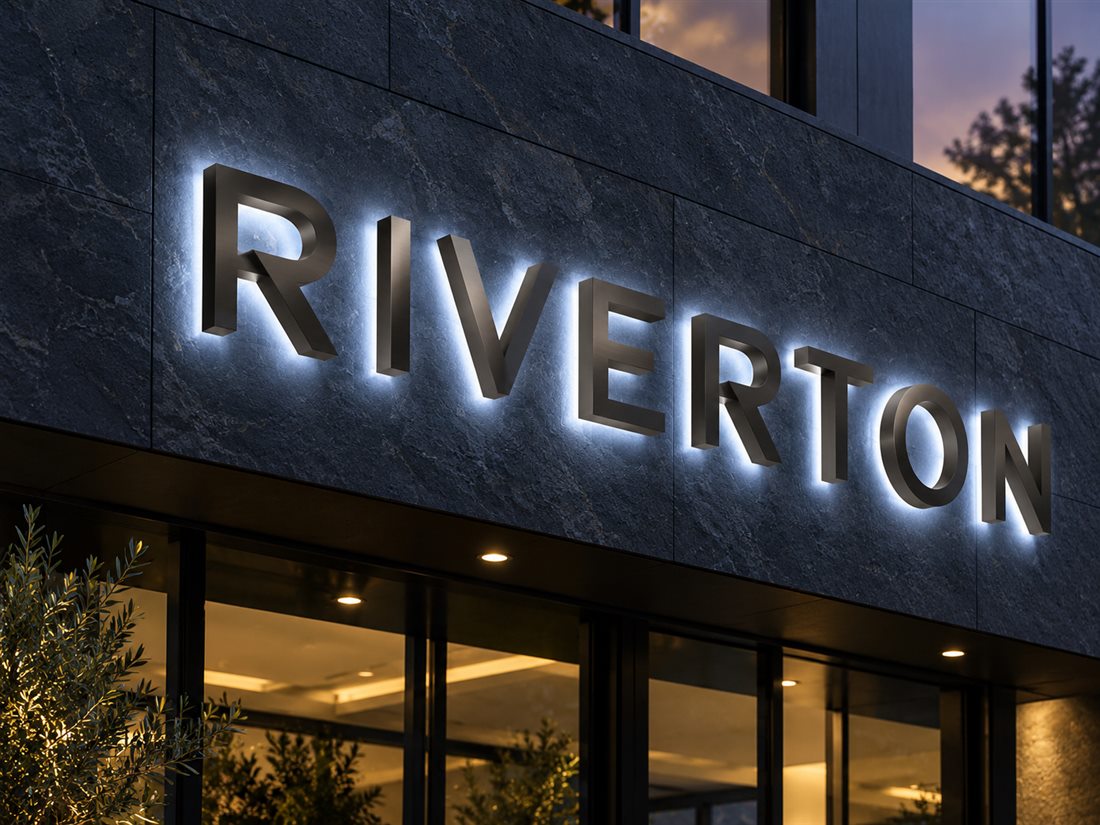 Indirect light creates a soft outline on the wall.
Combination-Lit and Side-Lit Letters
Combination-lit letters use more than one illuminated surface, such as a lit face and a halo. Side-lit designs let light pass through the sides, often using translucent acrylic. Check that the face, sides, and brand colors work together in both daylight and darkness.
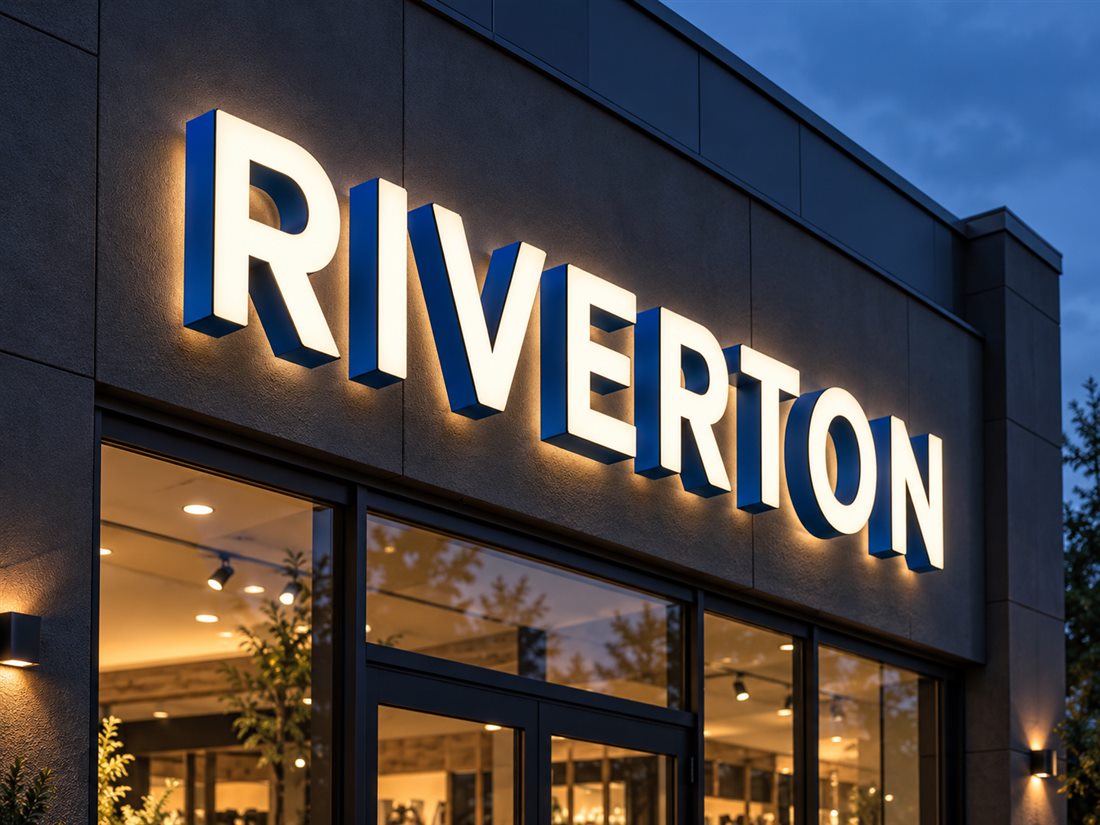 Front-and-side illumination combines face visibility with colored sides.
Non-Illuminated Channel Letters
Dimensional letters without internal lighting are a practical choice for interiors, well-lit locations, or businesses that close before dark. Stainless steel, aluminium, acrylic, and painted foam can create different finishes, weights, and depths.
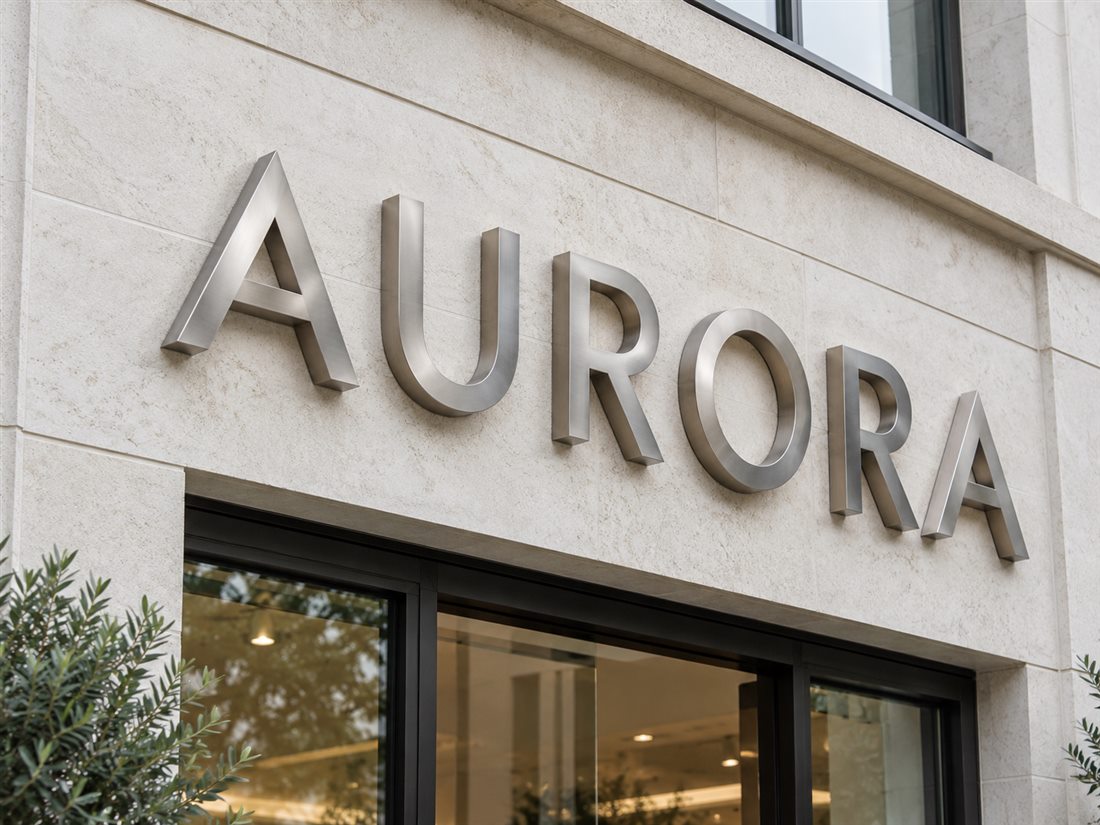 Unlit dimensional letters rely on their material, finish, and ambient light.
Dimensional Letters and Logos
Flat-cut letters and logos are cut from sheet material and mounted directly to a wall or panel. They create a clean, dimensional look without a full sign cabinet. Finish, thickness, mounting distance, and viewing conditions determine how much depth and shadow the design shows.
Light Box and Cabinet Signs
A cabinet sign contains a framed face, which may be illuminated from inside. It can present a continuous panel or a custom-shaped face and is often used when a single sign area needs graphics, a logo, and text together. Confirm whether the face is fixed or replaceable and how it will be accessed for maintenance.
Neon and LED Neon Signs
Traditional neon uses shaped glass tubes. LED neon-style signs use flexible LED lighting to create a similar outline effect. The two are different technologies, so specify which one you mean when requesting a quote. Both can suit decorative interiors, hospitality spaces, and feature walls; outdoor use requires components rated for the installation conditions.
Freestanding Signs: Pylon and Monument
Freestanding signs stand independently of the building and can help visitors identify a site from a road or entrance. A pylon or totem sign is typically tall for visibility over distance. A monument sign is generally lower and can be designed to fit the surrounding architecture or landscape. Foundations, wind loading, sightlines, and local sign rules need to be considered for each project.
Roof, Projecting, and Digital Signs
Roof signs are mounted at roof level and are planned around the building structure and local regulations. Projecting or blade signs extend from a facade to face people approaching along a sidewalk. Digital LED signs display changeable content; brightness, viewing distance, content legibility, and permitted operating conditions should be reviewed before installation.
How to Choose the Right Signage Type
- Location: Decide whether the sign belongs on a facade, indoors, at an entrance, or beside a road.
- Viewing distance: Size lettering and simplify the message for the distance and approach angle.
- Day and night visibility: Choose unlit, externally lit, face-lit, halo-lit, or another suitable lighting approach.
- Materials and finish: Compare the face, sides, returns, backing, and finish as separate parts of the specification.
- Installation conditions: Check the mounting surface, access, electrical supply, weather exposure, and applicable local requirements.
- Maintenance: Ask how the sign is cleaned, how lighting components can be reached, and what warranty applies.
Explore the channel letter examples above, compare project costs on our signage prices page, or start a 3D design on the Online Kutu Harf homepage.